
Trending
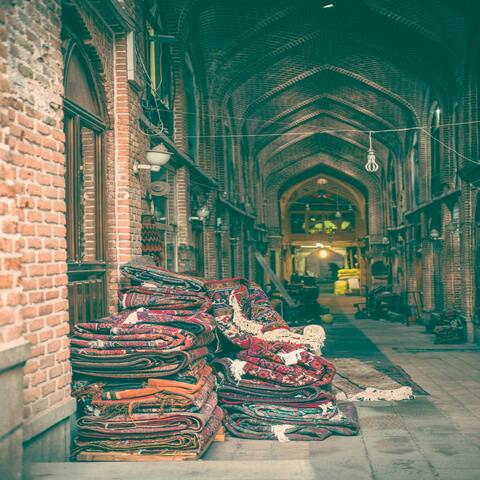
Explore the beauty of Tabriz Rugs and see why these Rugs from Iran stand out for their intricate designs, bold central medallions, and lasting value.
Introduction
Few floor coverings carry the quiet authority of Tabriz Rugs. The moment you see one, you notice the balance, the detail, and the way intricate patterns seem to unfold with intention. These are not casual designs. They reflect centuries of skill and artistic vision.
Tabriz is one of Iran’s most respected rug weaving centers. Rugs made there have shaped the global reputation of Persian rugs for generations. Since the 16th century, artisans in this region have refined techniques that elevate every knot and every motif.
In this guide, we’ll explore what makes Rugs from Iran, particularly Tabriz pieces, so admired. Central medallions, floral motifs, and deep shades of red all help explain why collectors and designers still value these rugs.
Powered by RedCircle
Related articles:
The Origins of Tabriz Rugs A Historic Rug Weaving Center
Tabriz has long stood at the heart of Persian rug production. By the 16th century, it had become a major rug weaving center known for technical mastery and artistic innovation. Royal workshops helped establish standards that influenced Persian rugs across regions.
Weavers developed methods that allowed rugs woven in Tabriz to achieve remarkable detail. Many pieces were hand knotted, giving artisans control over intricate designs and fine pattern transitions. This precision became a defining trait of the region.
Unlike some rural weaving traditions, Tabriz workshops often worked from carefully drawn pattern guides. This approach encouraged symmetry, balance, and clarity. Over time, these qualities built a reputation for high quality craftsmanship that still defines Tabriz Rugs today.
Heriz rugs often feature bold geometry and strong lines. In contrast, Tabriz pieces highlight refined curves, layered floral motifs, and elegant central medallions. Both styles share heritage, yet their visual language feels distinct.
The Artistry Behind Tabriz Rugs from Iran
At the center of many Tabriz Rugs, you’ll find a striking medallion. These central medallions anchor the entire composition. Around them, intricate patterns branch outward in harmony.
Designers frequently incorporate floral motifs lotus blossoms, vines, palmettes woven with precision. These elements flow into borders that frame the rug like a painting. The result feels structured yet alive.
Color also plays a powerful role. Traditional palettes often feature rich shades of red, thoughtfully balanced with ivory, navy, or soft blue accents. This thoughtful layering creates warmth without overwhelming the eye.
Below is a summary of defining features:
Table: Key Characteristics of Tabriz Rugs
| Feature | Description | Why It Matters |
|---|---|---|
| Central Medallions | Large, symmetrical focal points | Create visual balance |
| Intricate Designs | Fine lines and detailed motifs | Reflect skilled craftsmanship |
| Floral Motifs | Flowing botanical elements | Add softness and elegance |
| Shades of Red | Deep, layered reds with contrast tones | Provide warmth and richness |
| Hand Knotted Structure | Individual knots tied by artisans | Enhances durability and detail |
| 16th Century Origins | Developed in historic workshops | Adds cultural significance |
These qualities have earned Tabriz Rugs a reputation as high quality works of art, not just simple floor coverings.
Intricate Patterns and Craftsmanship What Sets Tabriz Apart
The true magic of Tabriz Rugs lies in their intricate patterns. Look closely and you’ll see repeating geometry woven into floral curves. No space feels accidental. Every section connects to the next.
Weavers perfected knotting techniques that allowed rugs woven in this region to achieve impressive detail density. This level of control made it possible to produce elaborate scenes, layered borders, and balanced compositions.
Here are the most recognizable elements found in Tabriz Rugs:
Top Design Elements in Tabriz Rugs
- Large central medallions that anchor the layout
- Delicate floral motifs arranged in flowing symmetry
- Intricate designs built from precise knotting
- Rich shades of red combined with deep blues or ivory
- Carefully structured borders framing the field
- Fine detailing that reflects high quality craftsmanship
Compared to Heriz rugs, which emphasize bold geometry, Tabriz pieces often showcase softer curves and layered complexity. Both belong to the wider world of Persian rugs, yet each offers a different aesthetic voice.
Tabriz Rugs in Modern Interiors
Although their roots trace back centuries, Tabriz Rugs feel surprisingly at home in modern interiors. Their balanced layouts and refined color palettes adapt easily to contemporary spaces.
A living room with clean lines gains warmth from intricate patterns underfoot. Subtle floral motifs and muted shades of red ground a minimalist bedroom. Even open plan spaces benefit from the structure provided by central medallions.
Designers often choose Persian rugs to add character without clutter. The key lies in contrast. When you pair modern furniture with a detailed Tabriz design, each element enhances the other.
Inspired by this heritage style? Browse our Traditional Persian Rugs Collection to discover the perfect design.
FAQ
1.What distinguishes Tabriz Rugs from other Persian rugs?
Tabriz Rugs stand out for their intricate designs, refined symmetry, and detailed central medallions. While many Persian rugs share floral motifs, Tabriz pieces often feature greater pattern precision.
2. Do Tabriz Rugs meet the highest standards of craftsmanship and quality?
Indeed, rugs from Tabriz have been recognized for their high quality for centuries, owing to meticulous knotting methods and harmonious compositions developed since the 16th century.
3. What distinguishes Tabriz Rugs from Heriz rugs in design and craftsmanship?
Heriz rugs typically feature bold geometric shapes and stronger contrasts. Tabriz Rugs often highlight softer curves, layered floral motifs, and more intricate patterns.
4. Are Tabriz Rugs suitable for contemporary interior settings?
Absolutely. Their structured layouts and harmonious colors integrate beautifully into modern interiors, adding warmth and visual depth.
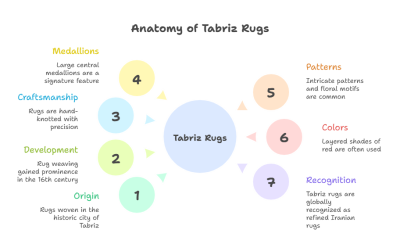
Infographic: Anatomy of Tabriz Rugs
Conclusion
Tabriz Rugs represent more than decoration. They reflect centuries of disciplined artistry, thoughtful design, and cultural continuity. From the structured beauty of central medallions to the delicate flow of floral motifs, each element reveals intention.
These Rugs from Iran continue to inspire collectors and designers because they balance history with adaptability. Their intricate designs feel rooted in tradition, yet they remain striking in modern interiors.
If you appreciate detailed craftsmanship and timeless structure, explore our Traditional Persian Rugs Collection and find the perfect piece that brings this legacy into your home.
─ Related Articles ─
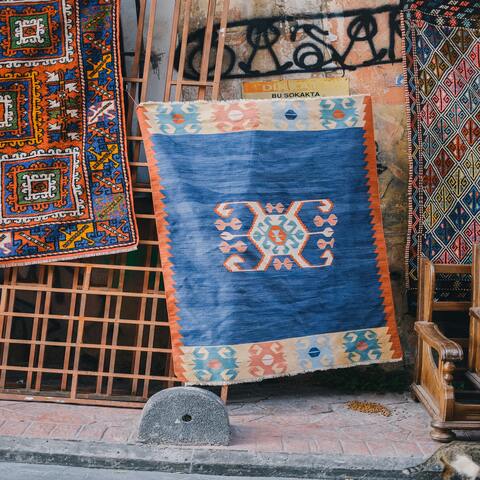
Persian Rug Runners for Hallways & Entrances
Discover how Persian rug runners transform hallways and entrances. Learn sizing, design, and layout tips...
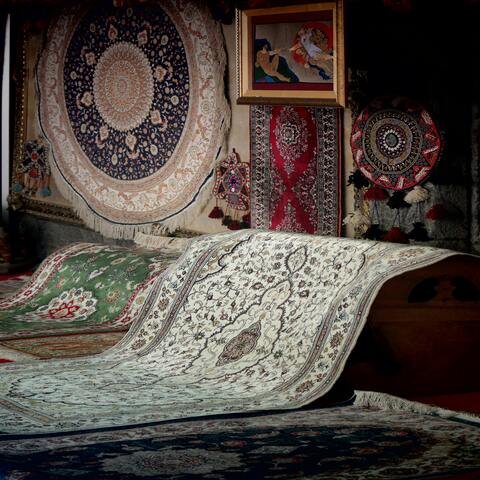
Green Persian Rugs: A Fresh Take on Traditional Style
Explore the beauty of Green Persian Rugs in traditional interiors. Find design tips and inspiration...
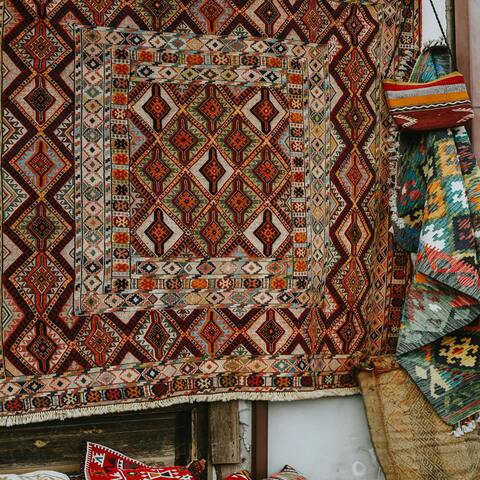
Vintage Persian Rugs: A Smart Long Term Investment?
Are Vintage Persian Rugs a smart long term investment? Discover how Persian Rugs, regional traditions,...
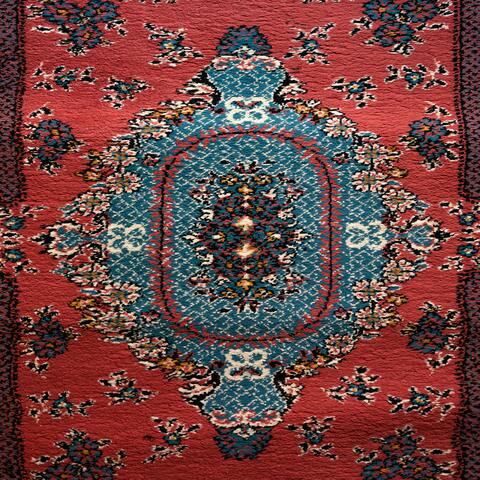
How to Choose the Perfect Large Persian Rug for Your Space
Learn how to choose the perfect large Persian rug for your home. Discover sizing, placement,...