
Trending
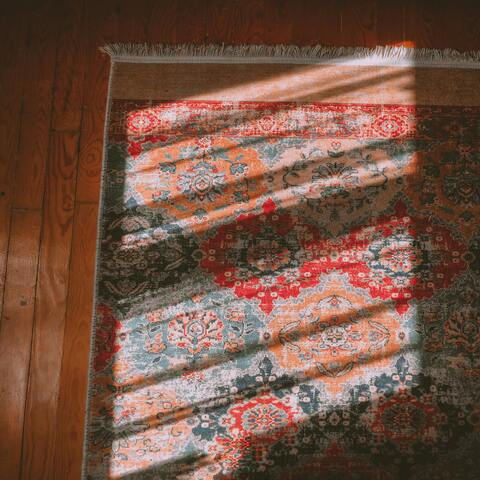
What is an Oushak rug? Learn about its 15th century origins, antique Oushak traits, and why this classic carpet still feels timeless.
Introduction
Some rugs have a presence that is immediately calming open, soft, and quietly luminous as they fill a room. The pattern looks large but not loud. Its colors radiate softly, never overpowering, inviting one to wonder: what defines an Oushak rug?
An Oushak Rug is a traditional Oriental carpet known for its large floral designs, gentle colors, and relaxed structure. It began in the 15th century and became especially popular during the 19th century. These rugs came from Western Anatolia and later became admired across the world.
Unlike many dense and detailed weaves, Oushak carpets feel spacious. They often come in generous room size dimensions. Their patterns are bold in scale but soft in mood. Their surface has a silky luminous glow that feels warm and inviting.
In this guide, we’ll clearly explain:
- Where Oushak rugs come from
- What makes them different from other Turkish rugs
- Why antique Oushak pieces are so valued
- How their structure creates that famous glow
- Why they still work beautifully in modern interiors
For lovers of classic floral design, our Traditional Persian Rugs Collection offers timeless elegance and refined craftsmanship.
Powered by RedCircle
Related articles:
The 15th Century Origins of the Oushak Rug
To understand what is an Oushak rug, we need to look back to the 15th century. During this time, weaving centers in Anatolia grew in skill and reputation. Among them, Oushak became one of the most respected.
Early Oushak carpets already showed the traits we recognize today:
- Large scale floral designs
- Open backgrounds
- Balanced medallions
- Soft color transitions
Instead of filling every inch with detail, weavers allowed space between motifs. This approach gave the rugs a sense of openness and visual harmony.
By the 16th and 17th centuries, Oushak carpets appeared in grand interiors. Their scale grew larger. Their patterns became more refined. Yet the rugs retained their signature sense of calm and openness.
Then the 19th century brought wider production. Larger homes demanded bigger carpets. Oushak workshops responded by creating expansive room size rugs that could anchor full living areas.
This period shaped the style many people recognize today.
What Makes an Oushak Rug Visually Unique?
When people search what is an Oushak rug, they often notice the pattern first.
The most defining feature is the angular large scale floral design. The flowers are not tiny or crowded. They are bold and spread across the surface with confidence.
You will often see:
- Oversized medallions
- Flowing vines
- Wide borders
- Soft outlines
- Muted tones like ivory, pale blue, dusty red, and warm gold
These floral patterns feel structured but never stiff. The shapes may be angular, but the overall look stays gentle.
This is why Oushak carpets work so well in larger rooms. The patterns remain clear from a distance. They do not disappear visually.
Compared to many other Turkish rugs, Oushak designs feel more open and airy. They create impact without crowding the space.
Table: Key Features of an Oushak Rug
| Feature | Description | Why It Matters |
|---|---|---|
| Origin | Western Anatolia | Establishes historical identity |
| Early Production | 15th century | Marks the beginning of the style |
| Expansion Period | 19th century | Increased room size weaving |
| Motif Style | Angular large scale floral | Creates bold yet open design |
| Construction | Often hand knotted | Produces relaxed pattern clarity |
| Material | Luminous wool | Gives silky luminous appearance |
| Scale | Frequently large room size | Ideal for expansive interiors |
This mix of scale, softness, and structure answers the question clearly: what is an Oushak rug? A floral driven Oriental weave, crafted to convey balance and presence.
How Oushak Rugs Compare to Other Turkish Rugs
Oushak carpets belong to the wider world of Turkish rugs, yet they stand apart from many tribal styles.
Some Turkish rugs focus on strong geometry and tight repetition. Oushak rugs focus on botanical movement and open space.
Here are the key differences:
- Larger motif scale
- Softer color contrast
- More spacious layouts
- Greater emphasis on floral patterns
- Frequent production in generous room size dimensions
This softer approach makes Oushak carpets feel welcoming rather than bold.
FAQ: What People Ask About Oushak Rugs
1. What is an Oushak rug in simple terms?
An Oushak Rug is a traditional Oriental carpet from Western Anatolia known for large floral motifs, soft colors, and a luminous wool surface.
2. Were Oushak rugs always hand knotted?
Many antique Oushak carpets were hand knotted. This method gives them a relaxed structure and softer pattern edges.
3. Why are Oushak rugs often large room size?
During the 19th century, demand grew for expansive interiors. Weavers created larger rugs to fill full rooms comfortably.
4. What makes an antique Oushak special?
An antique Oushak often shows softened dyes, subtle irregularities, and rich depth from aged luminous wool.
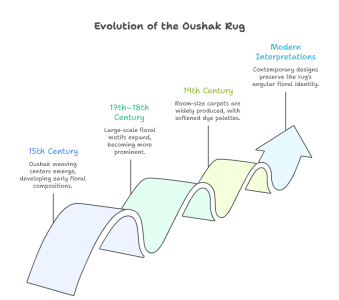
Infographic: The Evolution of the Oushak Rug
Conclusion
From the 15th century to the 19th century, Oushak carpets adapted without losing their character. Their silky luminous surface, bold yet spacious motifs, and generous proportions continue to define their appeal. Explore our Traditional Persian Rugs Collection to experience classic designs that feel both timeless and fresh.
─ Related Articles ─
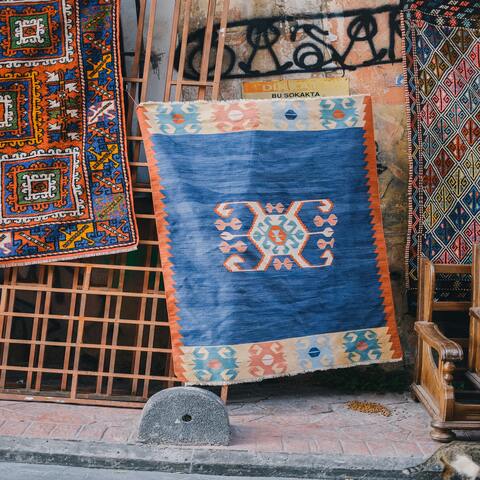
Persian Rug Runners for Hallways & Entrances
Discover how Persian rug runners transform hallways and entrances. Learn sizing, design, and layout tips...
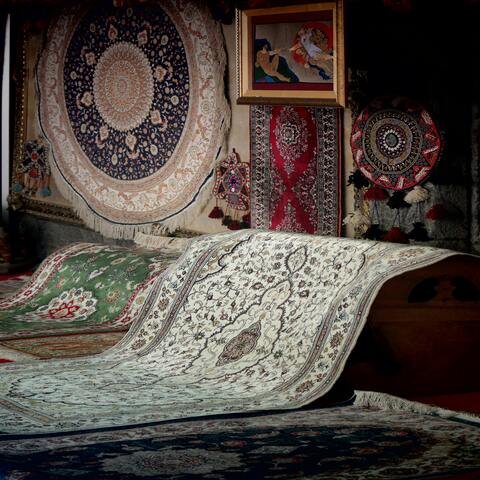
Green Persian Rugs: A Fresh Take on Traditional Style
Explore the beauty of Green Persian Rugs in traditional interiors. Find design tips and inspiration...
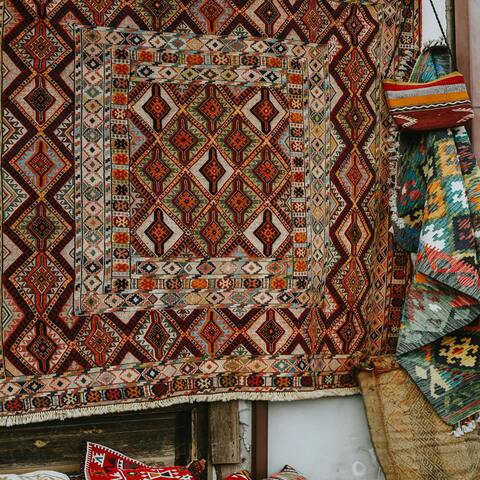
Vintage Persian Rugs: A Smart Long Term Investment?
Are Vintage Persian Rugs a smart long term investment? Discover how Persian Rugs, regional traditions,...
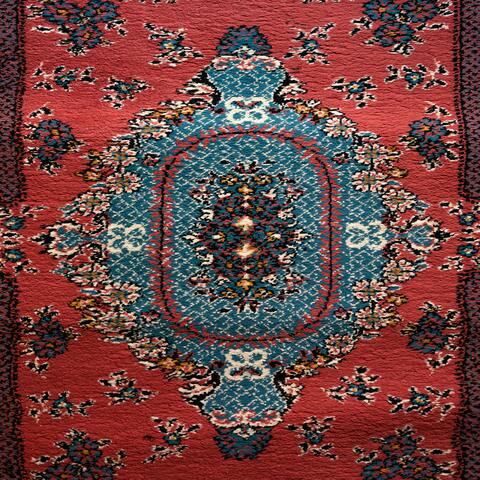
How to Choose the Perfect Large Persian Rug for Your Space
Learn how to choose the perfect large Persian rug for your home. Discover sizing, placement,...