
Trending
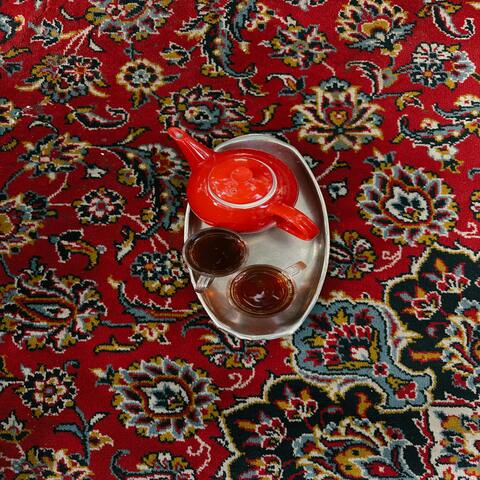
Discover Persian Carpet Knots and classic weaving techniques. Learn how knot types, warp and weft, and knot density shape Persian rugs.
Introduction
When you look closely at Persian rugs, something remarkable happens. Patterns stop feeling flat. Lines curve gently. Flowers seem to move.
This quiet magic doesn’t come from color alone. It comes from Persian Carpet Knots and the careful weaving techniques behind them.
Knots shape every rug’s personality. They control how strong it feels underfoot, how long it lasts, and how detailed the design can become. Long before patterns appear, weavers build a hidden structure using warp threads, weft, and carefully tied rugs knots. Each knot locks the design into place, one strand at a time.
Understanding knotting helps you read a rug the way you might read handwriting. Some knots feel bold and firm. Others allow softer curves and fine detail. Together, they create a wide range of styles seen across oriental rugs, especially Persian ones.
In this guide, we’ll walk through Persian carpet knots step by step, explain the main types of knots, and show how details like knots per square inch influence intricate designs. By the end, you’ll never look at Persian rugs the same way again and you’ll understand why classic patterns still feel alive today.
Powered by RedCircle
Related articles:
The Foundation of Persian Rugs: Warp and Weft Explained
Every Persian rug begins with structure. Before any knot appears, weavers stretch warp threads tightly on a loom. These vertical threads form the backbone of the rug. Without them, nothing holds its shape.
Next comes the weft, which runs horizontally across the warp. Together, they create the warp and weft system that supports all Persian knots. Think of warp as the spine and weft as the ribs. Knots sit on top, anchored firmly in place.
At the start, weavers often create a plain weave section. This tight, flat base stabilizes the rug before knotting begins. Once secure, the knotting process starts row by row.
The spacing of warp threads matters. A narrow gap allows finer detail. A wider gap creates bolder shapes. This spacing directly affects the number of knots a rug can hold and how detailed the final pattern becomes.
Table: Key Elements of Persian Carpet Structure (Persian Carpet Knots)
| Element | Description | Why It Matters |
|---|---|---|
| Warp Threads | Vertical foundation threads | Control rug strength and knot spacing |
| Weft | Horizontal threads | Lock knots into place |
| Plain Weave | Flat woven base | Stabilizes the rug structure |
| Pair of Warp | Two warp threads used for knotting | Determines knot type |
| Knots Per Square Inch | Knot density measurement | Affects detail and clarity |
This hidden structure allows Persian rugs to support complex designs while staying strong for years.
Step by Step: How Persian Carpet Knots Are Made
The knotting process looks simple at first, but each movement matters. Here’s a clear step by step look at how Persian Carpet Knots come to life.
First, the weaver selects a strand of yarn. They position it around a pair of warp threads. This pairing forms the base for each knot.
Next, they wrap the yarn around the warp threads. Depending on the knot type, the yarn may loop fully around both threads or pass between them. The knot tightens as the ends pull downward.
After tightening, the yarn ends face upward. Once a row finishes, the weaver passes weft threads across the surface. This locks the row into place.
Some techniques use double knotted rows for added strength. Others focus on precision, allowing smaller knots for fine curves.
This process repeats thousands of times. Each knot builds on the one before it. Over time, rows stack tightly, forming both the surface design and the rug’s durability.
Even small changes in how tightly a knot pulls or where yarn passes can change texture. That’s why experienced weavers develop a steady rhythm. Their hands remember what the eye alone cannot see.
Types of Knots in Persian and Oriental Rugs
Not all rugs knots work the same way. Different knot types create different looks, textures, and levels of detail. Persian and oriental rugs mainly rely on two classic knot styles.
List: Main Types of Persian Carpet Knots (Weaving Techniques)
- Persian Knots (Senneh Knot)
- The Senneh knot wraps around one warp thread and passes under the adjacent warp. This asymmetrical shape allows curves and fine detail, making it ideal for intricate designs.
- Turkish Knots
- Also called symmetrical knots, Turkish knots wrap evenly around a pair of warp threads. This creates a strong, balanced structure with a slightly bolder look.
- Single vs Double Knotted Rows
- Some designs use alternating knot rows or double knotted sections to increase durability without sacrificing detail.
- Open vs Tight Knotting
- Open knotting allows flexibility and flow. Tight knotting increases firmness and structure.
Each method serves a purpose. Persian knots often support flowing lines and soft shapes. Turkish knots provide strength and symmetry. Together, they explain why Persian rugs show such variety across regions and patterns.
Knots Per Square Inch and Design Precision
One of the most discussed features of Persian rugs is knots per square inch. This number describes how many individual knots fit within a single square inch of rug surface.
Higher knot counts allow finer lines and more detailed images. Lower counts create simpler, bolder patterns. Neither is better they simply serve different design goals.
When a rug has a high number of knots, the weaver can create subtle shading, curved petals, and detailed borders. This density supports complex imagery without distortion.
Lower knot counts work beautifully for large shapes and repeating patterns. They highlight color and rhythm instead of detail.
Knot density also affects texture. Rugs with dense knotting feel smooth and firm. Looser knotting creates a softer surface.
This balance between density and design explains the wide range of styles found in Persian rugs. From delicate florals to bold geometry, knot density shapes every visual choice.
FAQ
What are Persian Carpet Knots?
Persian Carpet Knots are individual yarn loops tied around warp threads to form the surface and design of Persian rugs.
How do Persian knots differ from Turkish knots?
Persian knots (Senneh knots) are asymmetrical and allow finer detail. Turkish knots are symmetrical and provide added strength.
Why are warp threads important in weaving techniques?
Warp threads form the foundation of the rug. They control knot spacing, shape, and durability.
What does knots per square inch tell you?
Knots per square inch show how detailed a rug can be. Higher counts support intricate designs.
Are all oriental rugs knotted the same way?
No. Oriental rugs use different knot types depending on region, design goals, and tradition.
Infographic: Understanding Persian Carpet Knots
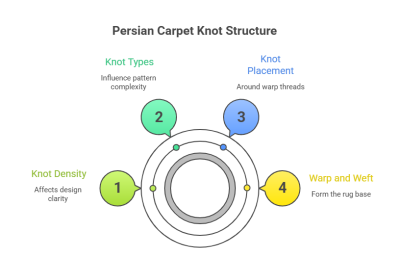
persian carpet knots
Conclusion: Reading the Story Woven Into Every Knot
Every Persian rug tells its story quietly. You just have to know where to look. Persian Carpet Knots reveal the rhythm, patience, and intention behind each design. From the steady alignment of warp and weft to the final trimmed surface, every detail matters.
Understanding weaving techniques doesn’t take away the mystery. It deepens appreciation. You begin to notice how curves flow, how patterns hold together, and how thousands of knots work as one.
That knowledge turns a rug into more than décor. It becomes something you notice every day a surface shaped by skill, balance, and thoughtful design.
If you’re drawn to classic patterns inspired by this long tradition, take a moment to explore our Traditional Persian Rugs Collection. These designs honor the structure, rhythm, and beauty that Persian weaving techniques have celebrated for generations.
─ Related Articles ─
Persian Rug Runners for Hallways & Entrances
Discover how Persian rug runners transform hallways and entrances. Learn sizing, design, and layout tips...
Green Persian Rugs: A Fresh Take on Traditional Style
Explore the beauty of Green Persian Rugs in traditional interiors. Find design tips and inspiration...
Vintage Persian Rugs: A Smart Long Term Investment?
Are Vintage Persian Rugs a smart long term investment? Discover how Persian Rugs, regional traditions,...
How to Choose the Perfect Large Persian Rug for Your Space
Learn how to choose the perfect large Persian rug for your home. Discover sizing, placement,...